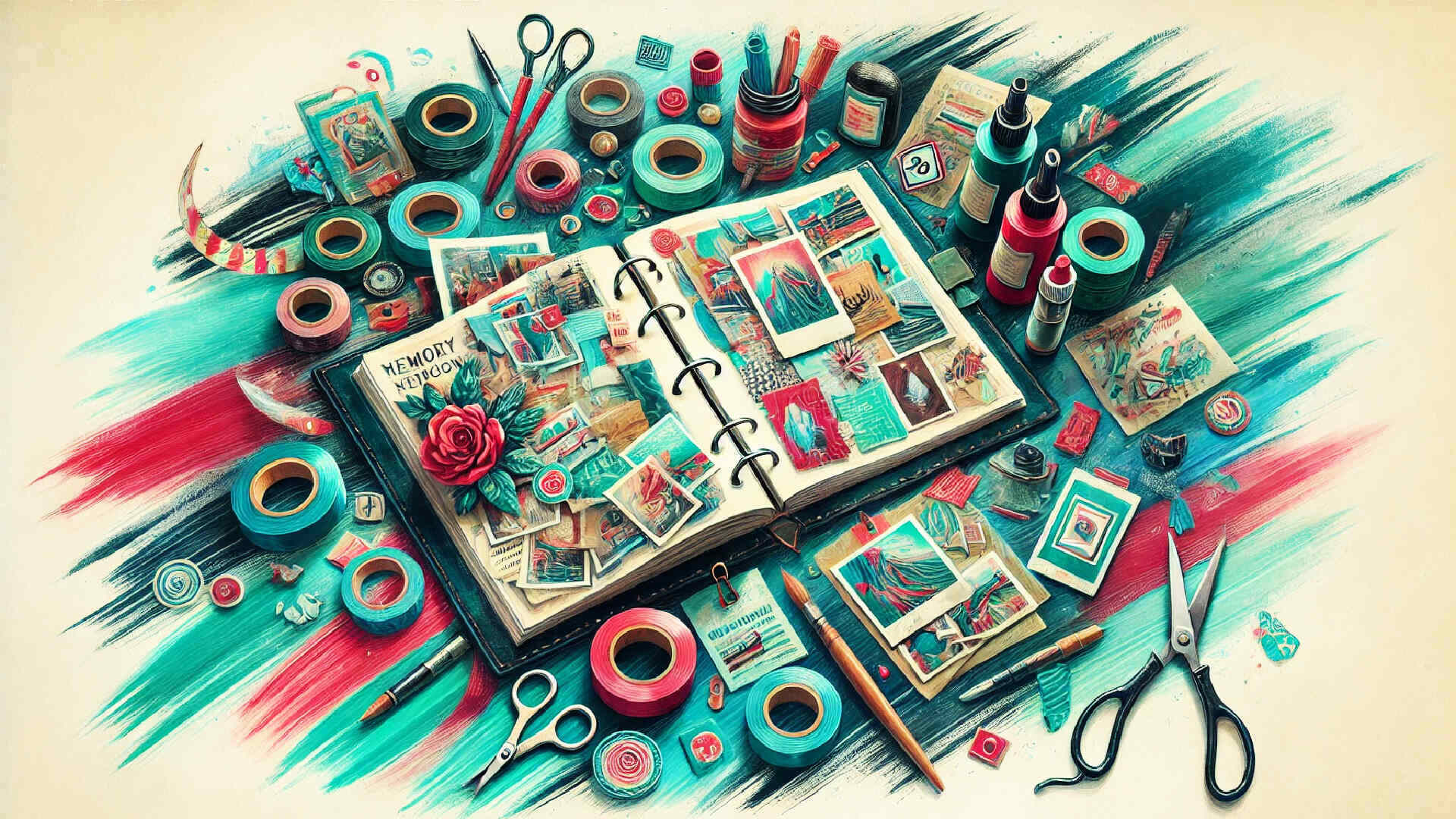
Keeping Memories on Paper
Life moves quickly. One day blends into the next, and before you realise it, entire seasons have passed. Yet some moments stay with you—the quiet ones, the joyful ones, the ones you wish you could hold onto just a little longer. That’s where memory-keeping becomes more than a hobby. It becomes a way of slowing time down.
I’ve always felt that there is something deeply comforting about holding a scrapbook in your hands. Digital photos are convenient, but they don’t carry the same feeling. A scrapbook has weight, texture, and presence. It feels real. When you turn its pages, you are not just looking—you are remembering.
Scrapbooking, to me, is not about perfection. It’s about preserving what mattered, in the way it mattered to you. A simple photograph becomes more meaningful when you pair it with a handwritten note. A small receipt, a ticket stub, or even a pressed flower becomes part of a story you can return to again and again.
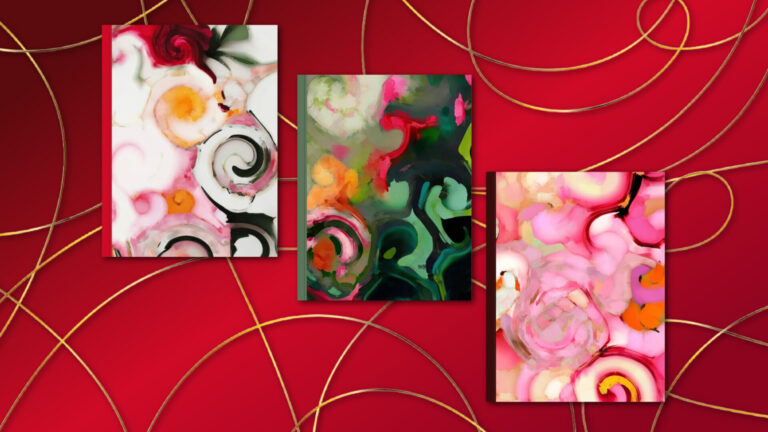
The choice of the book itself matters more than people think. When the pages feel right—clean, open, and inviting—you are more likely to return to them. Some prefer blank pages for complete creative freedom. Others like lined journals to write their memories in detail. I personally find that having a well-designed notebook makes the entire process feel calmer and more intentional.
You don’t need many supplies to begin. A few printed photos, a pen you enjoy writing with, and perhaps some simple tape or paper pieces are enough. The beauty of memory keeping is that it grows naturally. Over time, you begin to notice small things worth saving—a note, a date, a feeling you don’t want to forget.
Organising your scrapbook is also a personal choice. Some people move year by year, capturing highlights as life unfolds. Others prefer themes—family, travel, celebrations, or even quiet everyday moments. There is no fixed structure, and that is what makes it so meaningful.
What matters most is honesty. Write the way you remember, not the way you think it should sound. Even a single sentence beside a photograph can bring it back to life years later. Those small details become the most valuable part of the page.
A scrapbook is never finished. It sits quietly, waiting for you to return to it. And when you do, it feels like picking up a conversation with your past self.
If you’ve been thinking about starting one, don’t wait for the “perfect time.” Begin with a book that feels right in your hands—one that invites you to open it again. That is often all it takes to begin preserving the moments that matter.