What We Cannot See
I came across René Magritte’s painting The Lovers recently, and something about it stayed with me.
At first, it seems simple. Two people are kissing, but their faces are completely covered with white cloth. They are physically close, perhaps as close as two people can be, and yet they cannot see each other.
I kept thinking about that.
I don’t know exactly what Magritte intended by those covered faces, and perhaps that is part of what makes the painting so powerful. I can only say what I see when I look at it, and why it makes me think about love and trust today, almost a hundred years later.
How much do we ever really know another person?
We know what someone tells us. We know how they behave when they are with us. We know the stories they share about their past and the feelings they say they have. But there is an entire part of their life that happens when we are not there.
Sometimes I wonder about that unseen life.
Who is someone when I am not around? What do they choose to tell me, and what do they leave out? Some people are naturally private and discreet, and there is nothing necessarily dishonest about that. We are all entitled to parts of ourselves that belong only to us.
But where does privacy end and hiding begin?
I have trusted people because I believed what I could see. I believed I understood the person in front of me. Sometimes I even believed I was loved, only to discover later that there were things I had not seen at all.
Then I am left wondering: Did I simply not read the person well enough? Were there signs I missed? Or was something deliberately hidden from me that I could never have known?
Those are very different things.
But there is another possibility that troubles me. What if nothing is actually being hidden? What if two people can share exactly the same moment and experience it completely differently?
I know how deeply a moment can stay with me. When something or someone genuinely touches me, I can become completely absorbed in the experience. I remember conversations, feelings and small details long afterwards. And perhaps because something feels genuine and important to me, I assume the other person must have felt something similar.
But they may not have.
Maybe what I experienced as meaningful was simply pleasant to them. Maybe words that carry enormous weight for me are words they use more easily. Maybe neither person is lying. Maybe the same moment simply meant something different to each of them.
When I look at The Lovers again, I wonder about that too.
They are sharing the same kiss. But are they sharing the same experience?
We cannot see their faces. We cannot know.
Perhaps sometimes the veil between two people is secrecy. Sometimes it is privacy. Sometimes it is the past. Sometimes it is something deliberately concealed. And sometimes it is simply the fact that we can never experience the same moment from inside another person’s mind.
Modern life complicates this even further. We can connect instantly, reconnect after many years, and exchange thoughts, photographs and feelings very quickly. Something can feel intimate and special, yet we cannot know how many other people have heard similar words or received the same attention.
It sometimes makes me wonder how we know when someone’s feelings are genuine.
When I look at The Lovers, I don’t see two people who have stopped trying to reach each other.
I see two people reaching.
It simply captures the moment of reaching.
And yet the veil remains.
Maybe that is the paradox of love I see in this painting. We want to know another person completely, but perhaps we never can. We can only know what we see, what they tell us, and what we experience with them.
And then we have to decide whether to trust it.
Maybe that is what makes trust so difficult. We trust someone even though we can never know everything about them.
We look at what we can see. We listen to what they tell us. We decide what to believe.
Sometimes we are right.
Sometimes we are not.
Maybe the veil never really disappears.
Further viewing: René Magritte created four variations of Les Amants in 1928. You can view the complete series and read about the four paintings by clicking the link
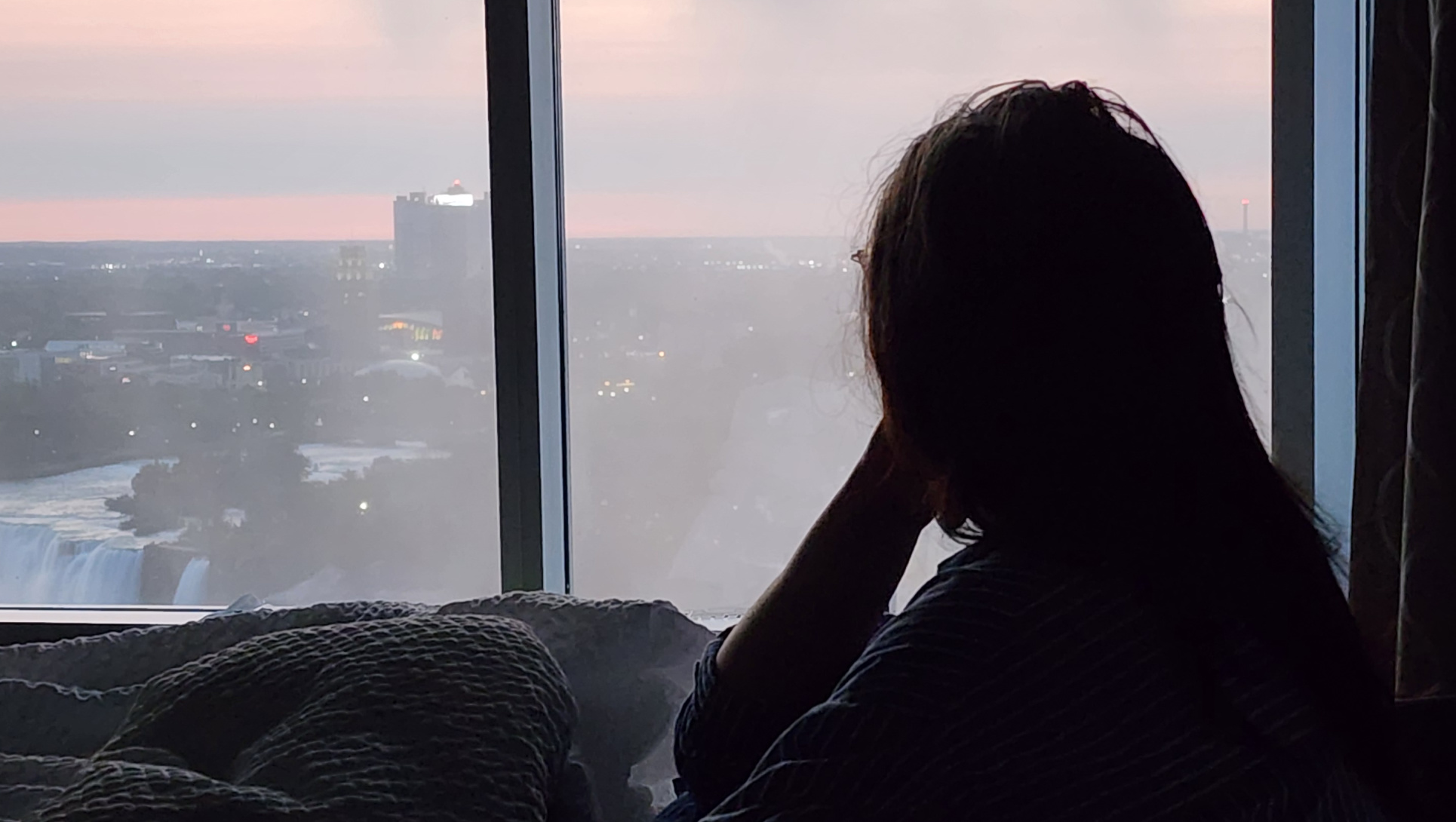
Photography concept by Afia Razi ©