
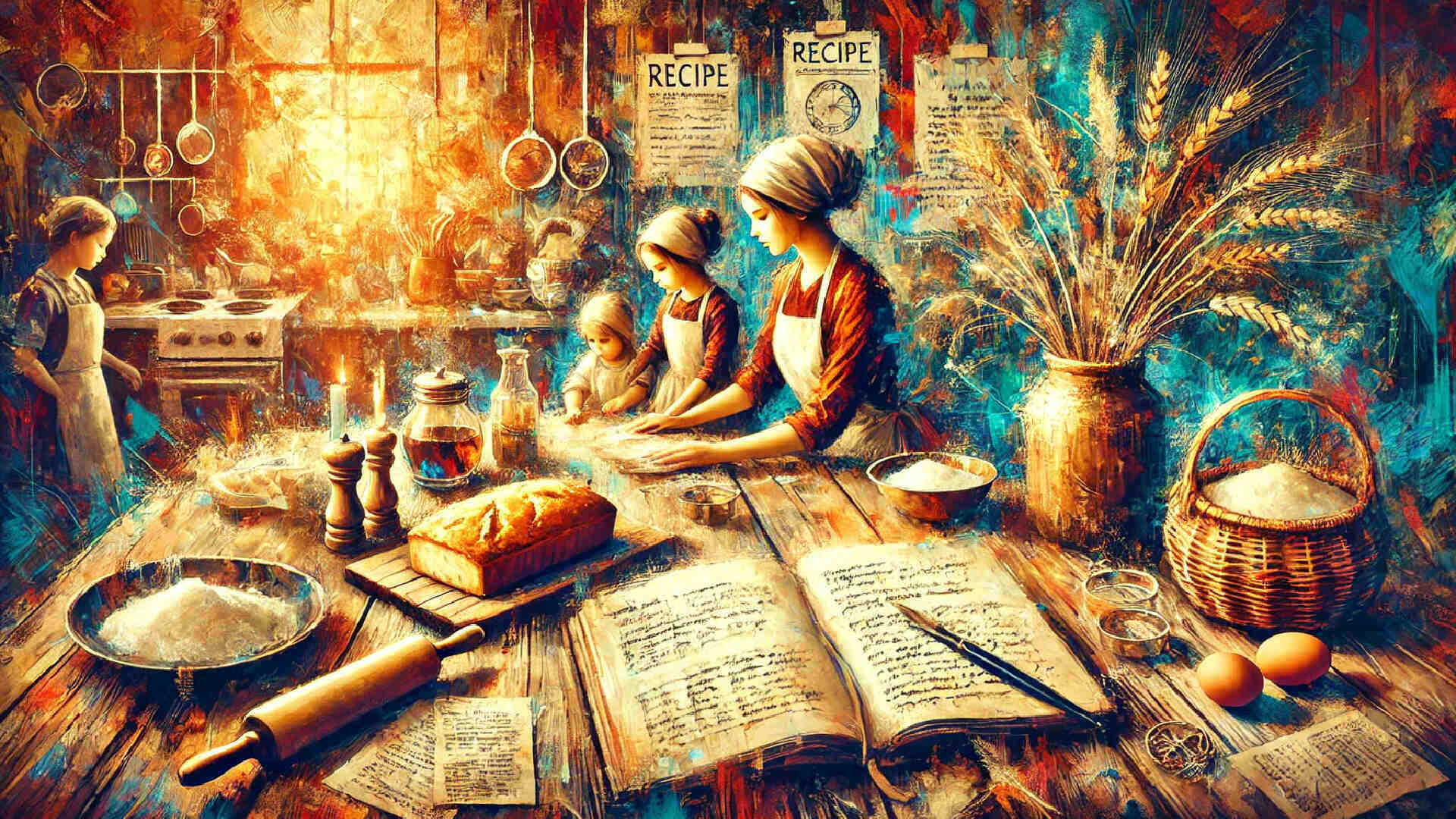
Keeping Family Baking Traditions
A recipe can tell us what to put in a bowl, but it does not always tell us everything we need to know. How soft should the dough feel? Did someone use less sugar? Was that extra spoonful of flour measured, or added because the mixture looked too wet?
These details are easy to forget. To me, this is where a handwritten recipe journal becomes useful. It gives us a place to record both the instructions and the small decisions that make a recipe work.
The Personal Value of Handwritten Recipes
There is something personal about seeing someone’s handwriting beside a recipe. A crossed-out measurement or a note saying “leave it a little longer” tells us how that person actually baked.
I would leave room for these details rather than trying to make every page look perfect. A working recipe journal will have corrections, additions, and perhaps a few flour marks. Those pages show that the recipes have been used.
If a recipe comes from someone else, include their name and ask about anything unclear while you can.
Choosing the Right Recipe Journal
The right journal depends on how you like to work. A lined notebook gives you freedom to write as much as you need. A recipe journal with dedicated spaces can help you record ingredients, instructions, baking times, and results consistently. A scrapbook works well if you have loose recipe cards, photographs, or clippings.
I think writing space matters more than decoration. Check whether there is enough room for changes and observations, especially if you tend to adjust recipes as you go.
Organising Your Family Baking Recipes
Choose an arrangement that works for you. You could group recipes by bread, cake, biscuit, and pastry, or keep special-occasion baking together.
Number the pages and leave space for an index to make a simple notebook easier to use. You do not need an elaborate system.
For each recipe, record the quantities, oven temperature or bread-maker setting, preparation time, and baking time. Include the equipment or tin size when it affects the result. These practical details help someone else follow your instructions.
Adding Memories and Baking Notes
You do not need a long story beside every recipe. A few words about who shared it, when you usually made it, or why you kept it can be enough.
Alongside those memories, record what happened when you baked it. Did the loaf rise properly? Was the crust too dark? Did a substitution change the texture?
Date your adjustments so you can distinguish the original recipe from later versions. A photograph can also help show the result you were aiming for.
Passing Recipes On
A family baking journal does not have to begin with generations of inherited recipes. It can start with something you make today and want to share.
That is one reason I see value in keeping a dedicated notebook: it brings scattered recipes and useful observations together. Over time, it becomes a record of what you bake, what you learn, and what you hope someone else will enjoy making.