
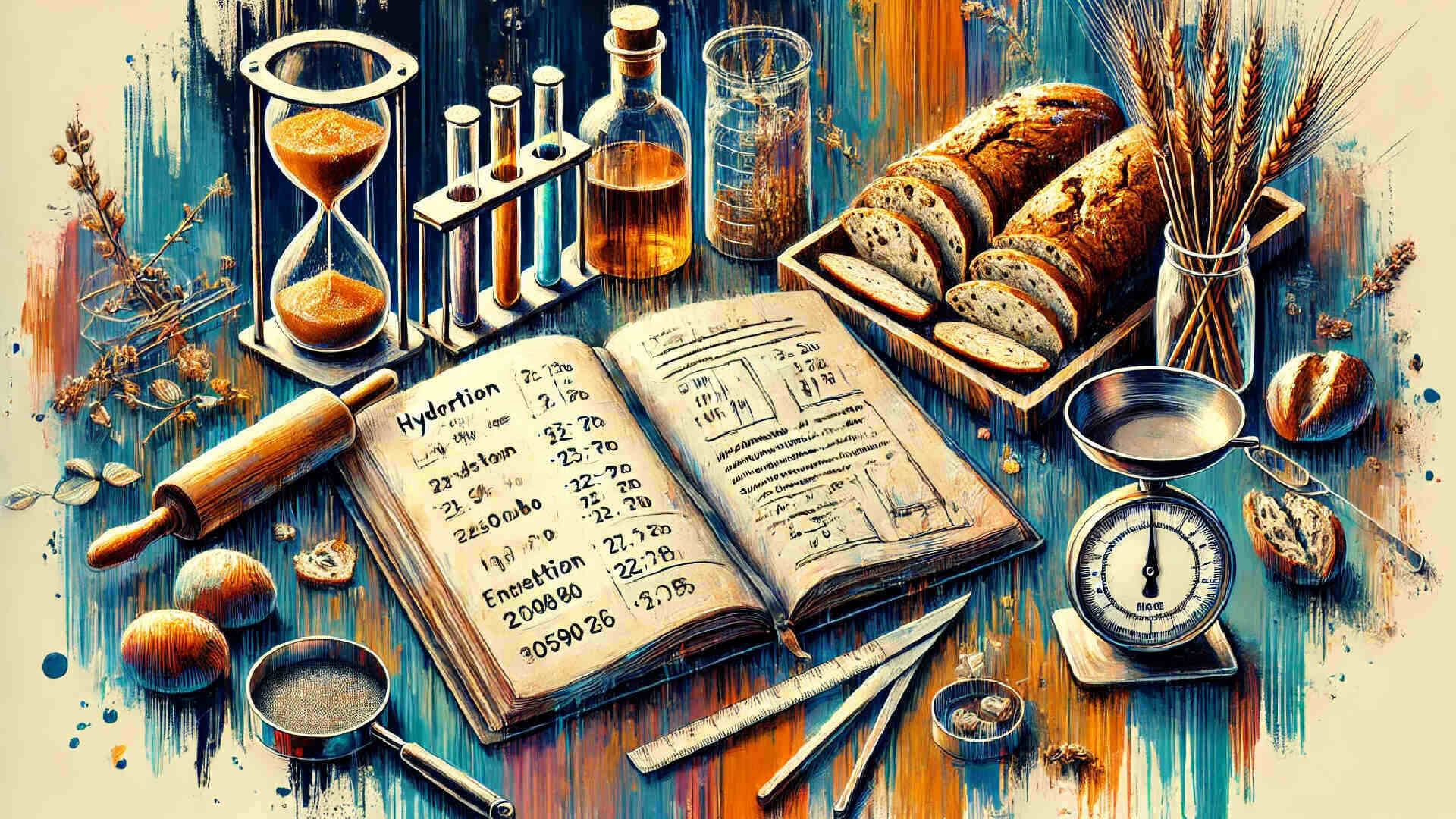
Bread Baking Experiments
A Notebook for Better Bread Baking
There is something deeply satisfying about baking bread. Every loaf teaches you something new, whether it rises beautifully or doesn’t turn out quite as expected. Over time, those small lessons become valuable—but only if you remember them.
That’s where a simple notebook can make all the difference.
Keeping notes while you bake isn’t about turning your kitchen into a laboratory. It’s about creating a record of what worked, what didn’t, and what you’d like to try next. Instead of relying on memory, you begin building a personal reference that grows with every loaf you make.
Why Keep a Bread Baking Notebook?
Bread recipes often look simple on paper, yet tiny changes can produce very different results. The amount of water, the type of flour, room temperature, proofing time, or even a different brand of yeast can all affect the finished loaf.
Writing these details down helps you understand why one bake was better than another. If you create the perfect crust or discover a softer crumb, you’ll know exactly how you achieved it.
What to Record
You don’t need complicated charts or scientific formulas. Start by recording the basics for every bake:
- Date
- Recipe name
- Flour used
- Hydration or liquid amount
- Mixing and kneading method
- Proofing time
- Baking temperature
- Final result
Leave a little space at the end of each entry for your own observations. Was the dough easier to handle? Did the loaf rise higher than usual? Would you reduce the baking time next time? These small notes often become the most useful part of the page.
Learn From Every Loaf
Even experienced bakers have recipes that don’t go quite as planned. Instead of seeing those loaves as failures, use them as opportunities to learn.
After a few weeks of keeping notes, you’ll begin noticing patterns. Perhaps one flour consistently gives you better results, or a slightly longer proof creates a lighter texture. These are the kinds of details that are easy to forget but invaluable when they’re written down.
A notebook also makes it easier to revisit favourite recipes months later without wondering what you changed the last time you baked them.
Make It Your Own
Your notebook doesn’t have to contain only measurements. Add photographs of finished loaves, sketch scoring patterns, tape in handwritten family recipes, or keep a list of breads you’d like to try next.
Over time, it becomes more than a collection of recipes. It becomes a record of your progress as a baker.
Whether you’re just beginning your bread-baking journey or you’ve been baking for years, keeping a dedicated notebook helps turn everyday baking into a growing collection of knowledge with every loaf. Sometimes the best improvements don’t come from buying another kitchen gadget or trying the latest technique. They come from understanding what worked, learning from what didn’t, and building on your own experience.
Whether you prefer a simple notebook, a lined journal, or a scrapbook filled with photos and handwritten notes, keeping a record of your bread baking makes every loaf a little more rewarding. Over time, your notebook becomes more than a place to record recipes; it becomes a personal reference filled with ideas, discoveries, and techniques that are uniquely yours. Long after you’ve forgotten the details of a particular bake, your notebook will still have them waiting for you.